New: Become a Peace School 2027 — read the guide and get ready for Peace Day
A guide for schools

Become a Peace School 2027

What it means to join the Global School Movement — and ideas to help your school get ready for Peace Day on 21 September 2027.

Children reaching up together towards an olive sproutPeace School 2027 badge
Our invitation

What it means to be a Peace School

A Peace School gives children room to practise peace — and to share their ideas with the world. Joining is free for every school, public, independent or faith-based, in any country.

As a Peace School 2027, your school commits to:

  1. Endorse the manifesto and work with its principles in everyday school life: seek peace, strengthen peace and choose peace.
  2. Create conversations about peace — and about what can challenge it — in class, across year groups and with families.
  3. Mark Peace Day on 21 September 2027 with a shared activity, and tell us what you did.
  4. Give children a real voice, for example by working with the question behind the Children's Peace Goals.
  5. Keep children safe: adults are always responsible, participation is voluntary, and photos and films are only shared with consent.

We also encourage — but never require — every Peace School to invite three more schools.

What your school receives

  • The right to present your school as a Peace School 2027 — use the badge on your website, on social media, in marketing and in materials about your school.
  • A place on the world map of Peace Schools.
  • Ideas for peace projects and Peace Day.
  • Contact with partner schools in other countries In development
  • A channel to political leaders for your pupils' ideas.

What it costs

Nothing. Children of World Peace raises its own funding so that no child or school pays to take part.

How much time?

As much as suits your school — from a single lesson on Peace Day to a project over several weeks.

Getting ready

The road to Peace Day 2027

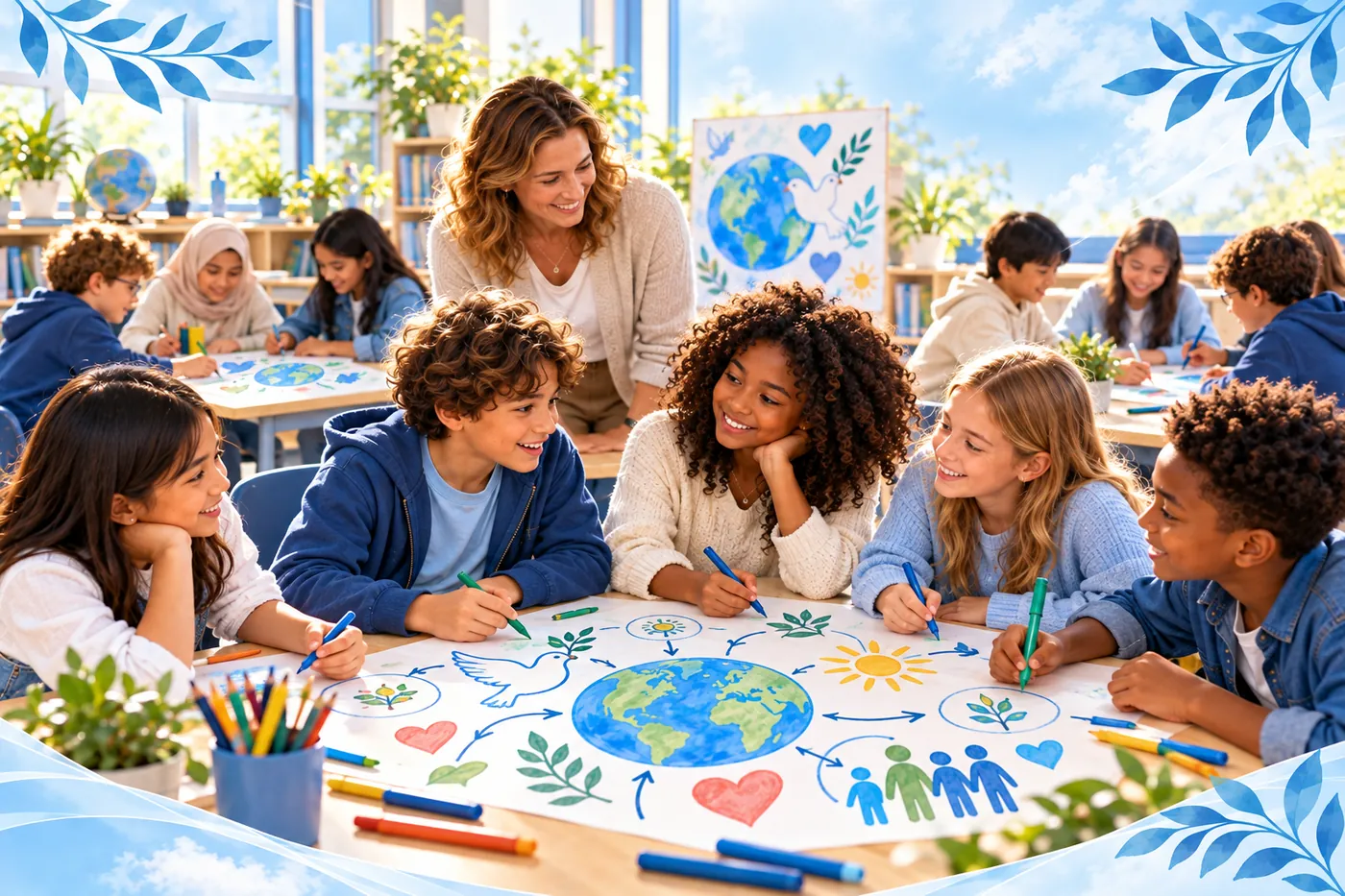
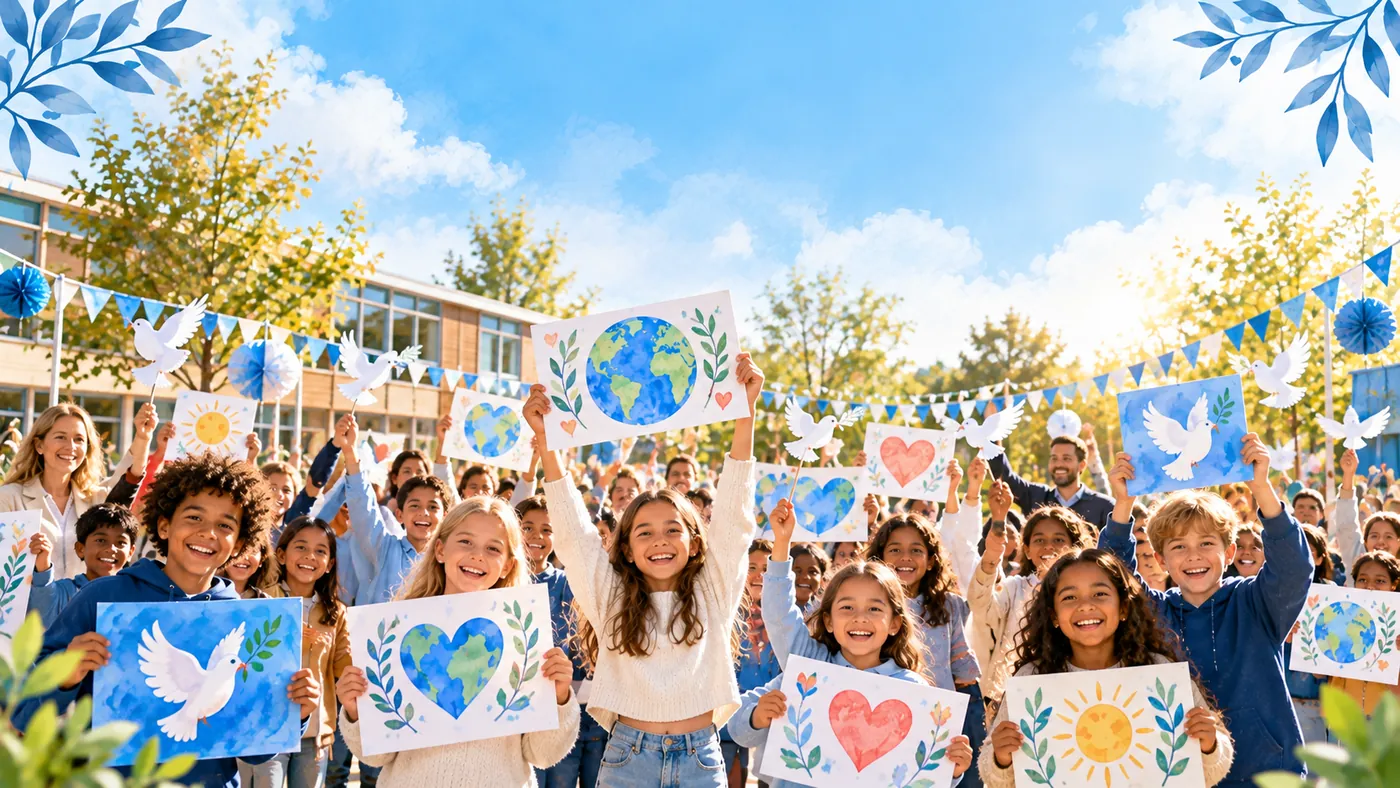
Children and teachers celebrating Peace Day together
  1. Spring 2027Join at childrenofworldpeace.org/schools and choose a contact person.
  2. May–JuneChoose your project and decide what your Peace Day event will be.
  3. JuneAsk parents for consent if you plan to share photos or films.
  4. Aug–SeptChildren explore, create and prepare. Invite your guests.
  5. 21 SeptemberHold your event with Peace Schools around the world — then share it.
Project ideas

Six ways to work with peace

Each idea leads to an event on or around Peace Day. Adapt it to your pupils' ages, your curriculum and your community.

Seek

1. What Does Peace Look Like?

All ages · 2–4 weeks

Pupils explore peace through drawing, painting, photography and writing — at home, at school and in the world.

  1. Hold a peace conversation: what is peace, and what makes it difficult?
  2. Each child creates a work about peace.
  3. Classes curate the works together.

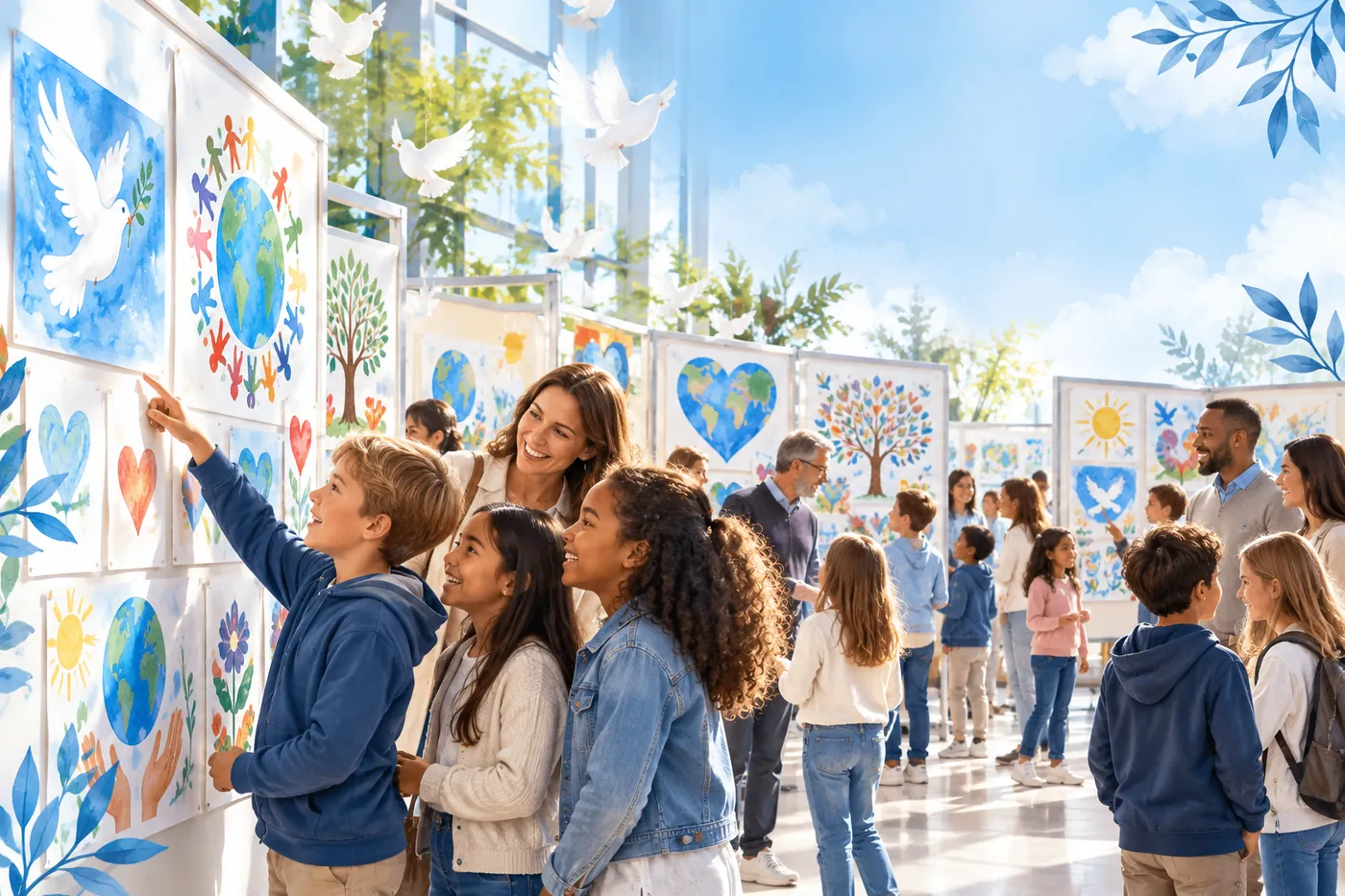
Event: a Peace Exhibition for parents, the local community and invited guests.
Seek · Strengthen

2. Children's Peace Talks

Ages 10+ · 2–3 weeks

Small groups choose a peace theme — bullying, inclusion, conflict, climate or online hate — and prepare a short talk.

  1. Groups research their theme.
  2. They prepare a 3–5 minute talk with one proposal.
  3. Practise in class and give each other kind feedback.

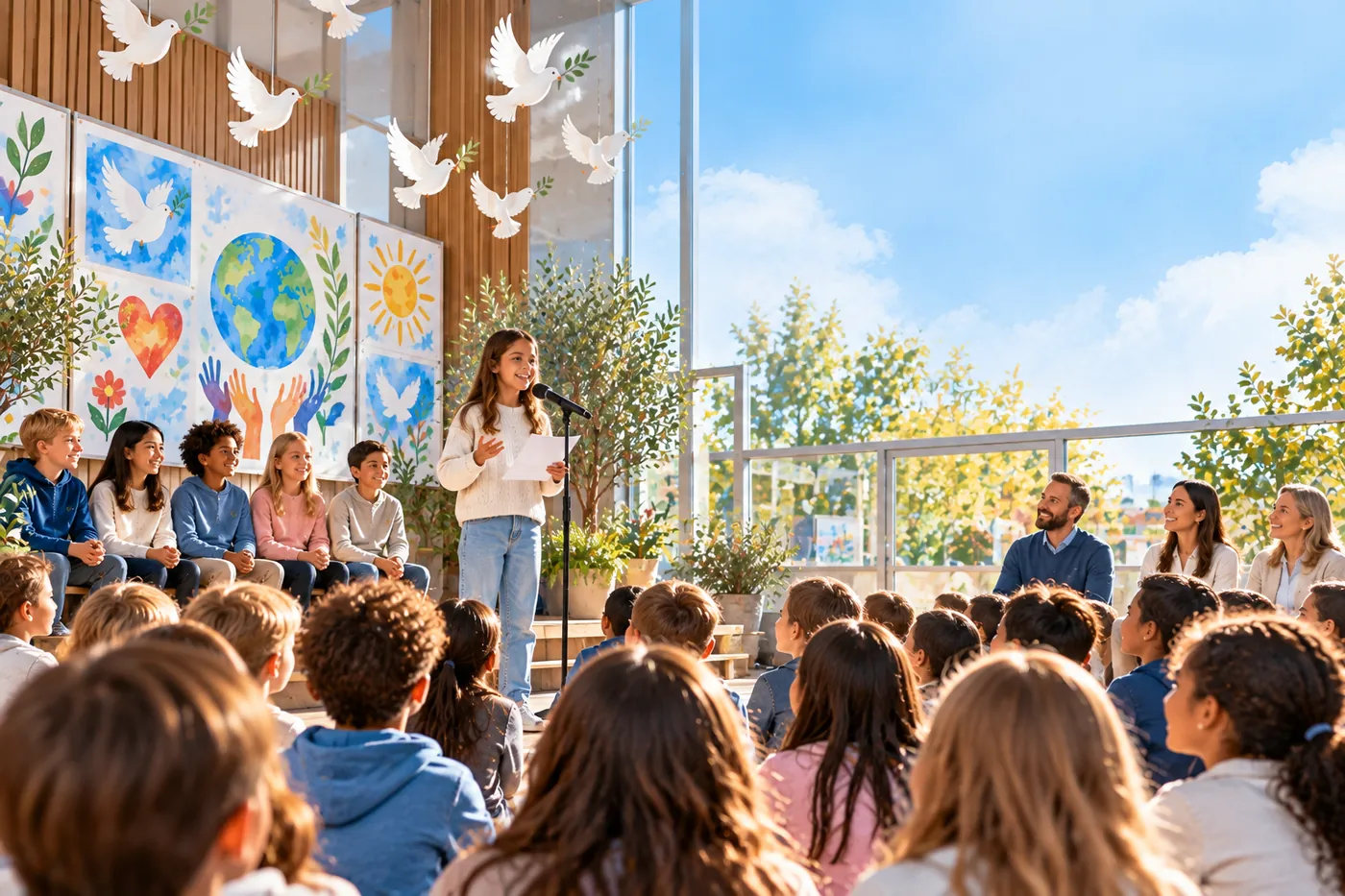
Event: a Peace Assembly where pupils give their talks to the whole school.

Choose

3. Ask a Leader

Ages 10+ · 3–4 weeks

Pupils prepare questions and proposals for peace and meet a local political leader to discuss them.

  1. Classes collect questions about peace in their community.
  2. Pupils choose the five most important.
  3. Invite a local leader — we can help you make contact.

Event: a dialogue meeting between children and a political leader, with teachers present.

Strengthen

4. Peace Letters Across Borders

All ages · 4–6 weeks

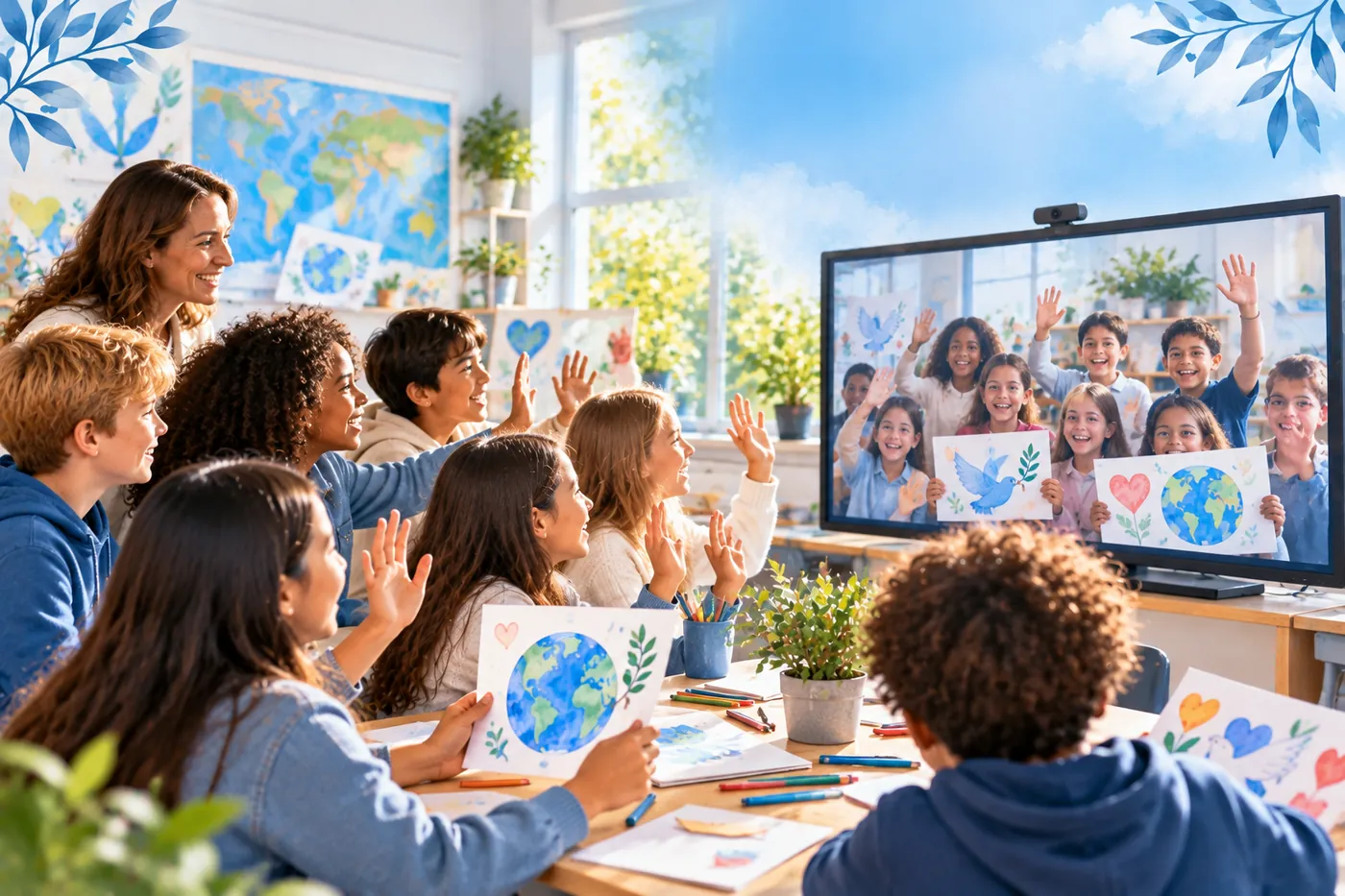
Your class exchanges letters, drawings or short videos with a Peace School in another country.

  1. Introduce yourselves: your school, your town, your hopes.
  2. Ask each other: what does peace mean where you live?
  3. Find something you share — and something you do differently.

Event: a live video meeting between the two classes on Peace Day.

Seek · Choose

5. Our Peace Film

Ages 9+ · 3–5 weeks

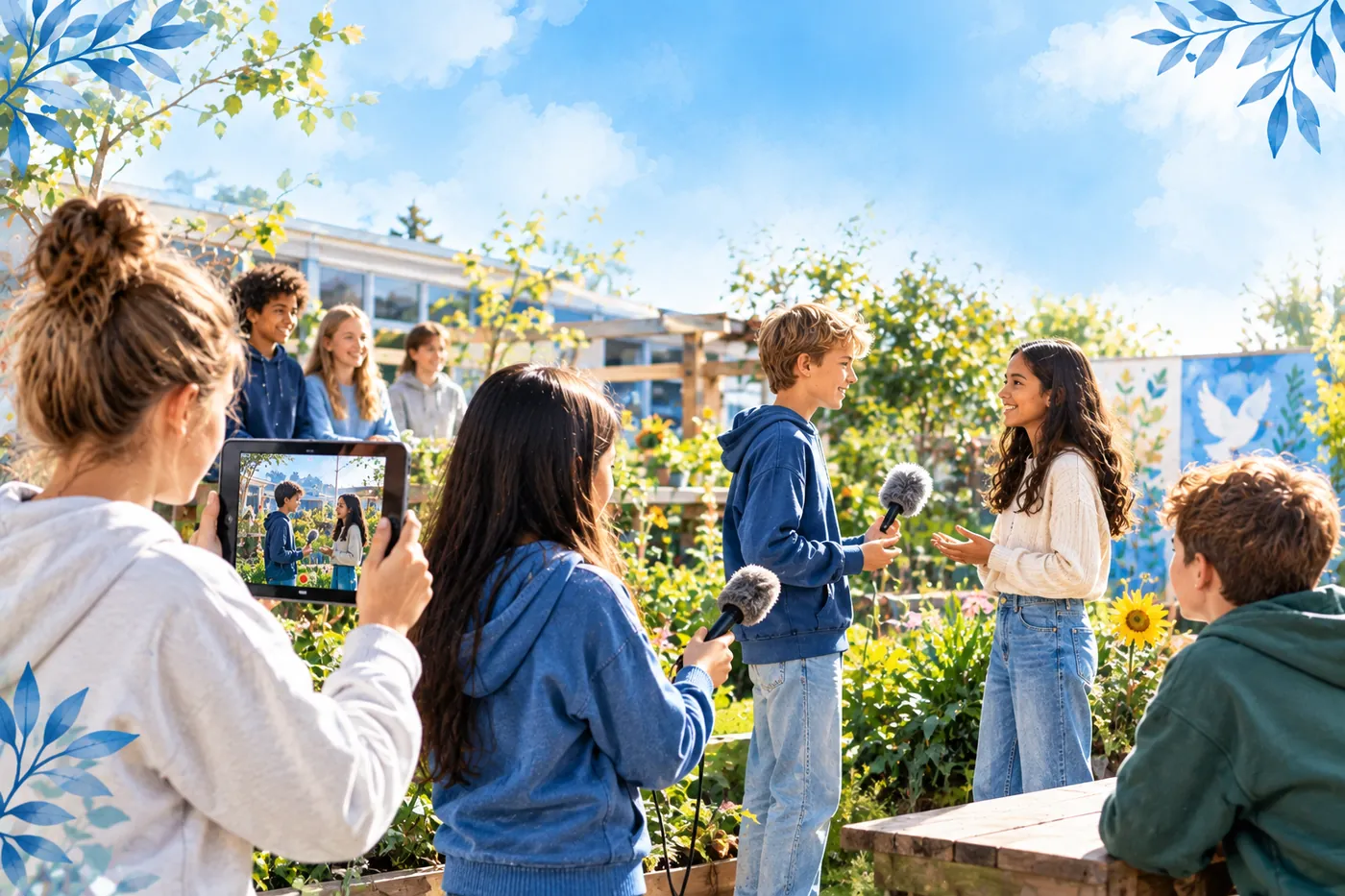
Pupils make a short film (1–3 minutes) about peace in their school or community, to share with Peace Schools around the world.

  1. Pupils write a simple storyboard.
  2. Film with tablets or phones; children can appear without names.
  3. Add English subtitles so other schools can follow.

Event: a film premiere on Peace Day — and the film is shared with other Peace Schools.

Seek · Choose

6. Our Peace Goals

Ages 8+ · 1–3 weeks

Pupils work with the question: “What would it take for you — and every other child — to live in peace?”

  1. Brainstorm in small groups.
  2. Each class agrees on three peace goals.
  3. Choose one goal your school can act on now.

Event: presentation of the class peace goals — which become part of the Children's Peace Goals.

Step-by-step instructions for every project are in the downloadable guide.

Share your Peace Day

Let the world see your school

Send photos and films from your event to our Facebook page, tag us when you post, or email them to peace@childrenofworldpeace.org. Whenever you share on social media, use all five hashtags:

#ChildrenOfWorldPeace #PeaceEducation #GlobalSchools #ChildrenVoices #PeaceBeginsHere

Before you share: keep children safe

  • Only with consent from parents or guardians.
  • Never children's full names or details that could locate them.
  • Children choose whether they want to appear.
  • Children in sensitive situations are not shown or named.
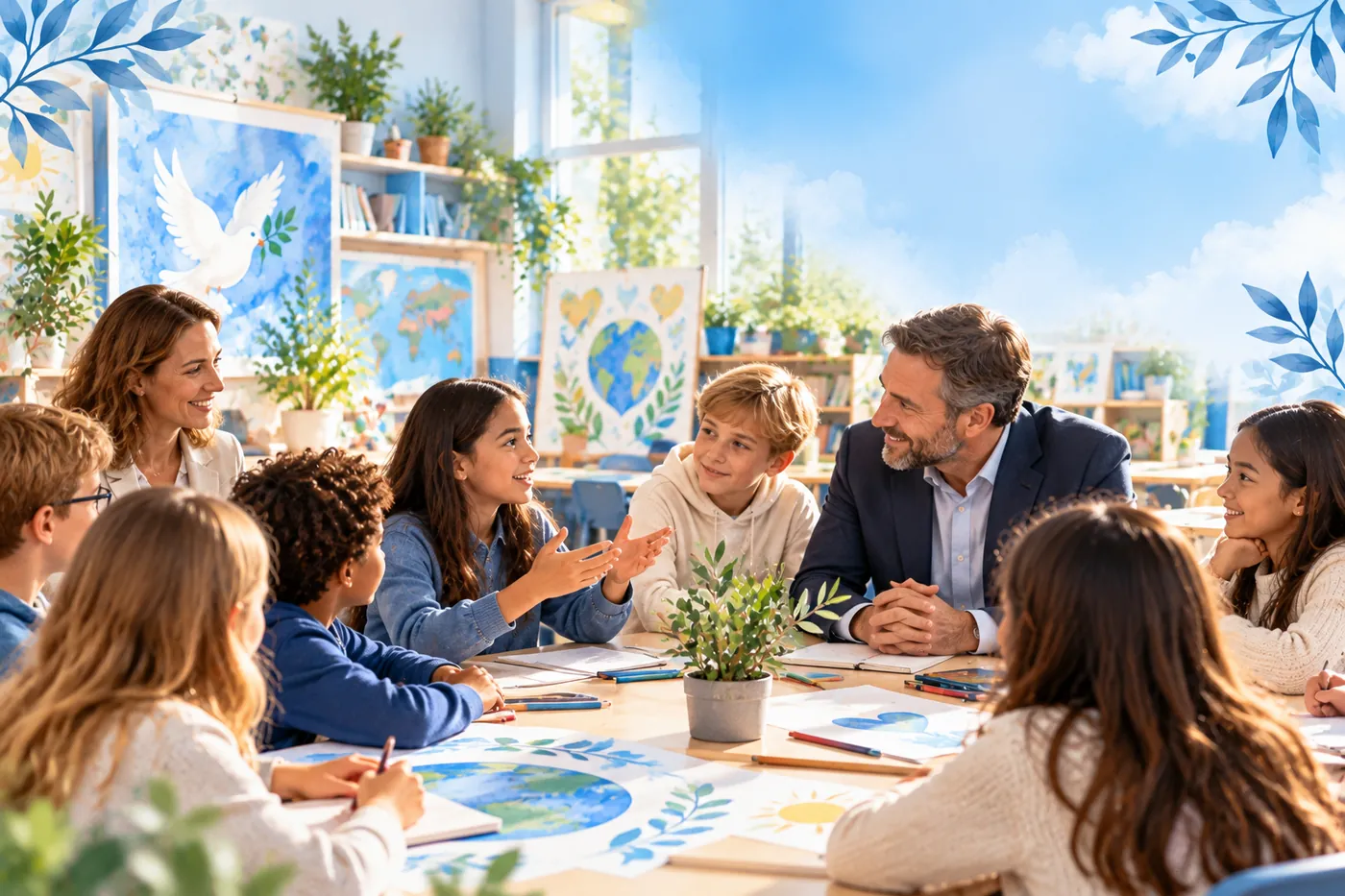
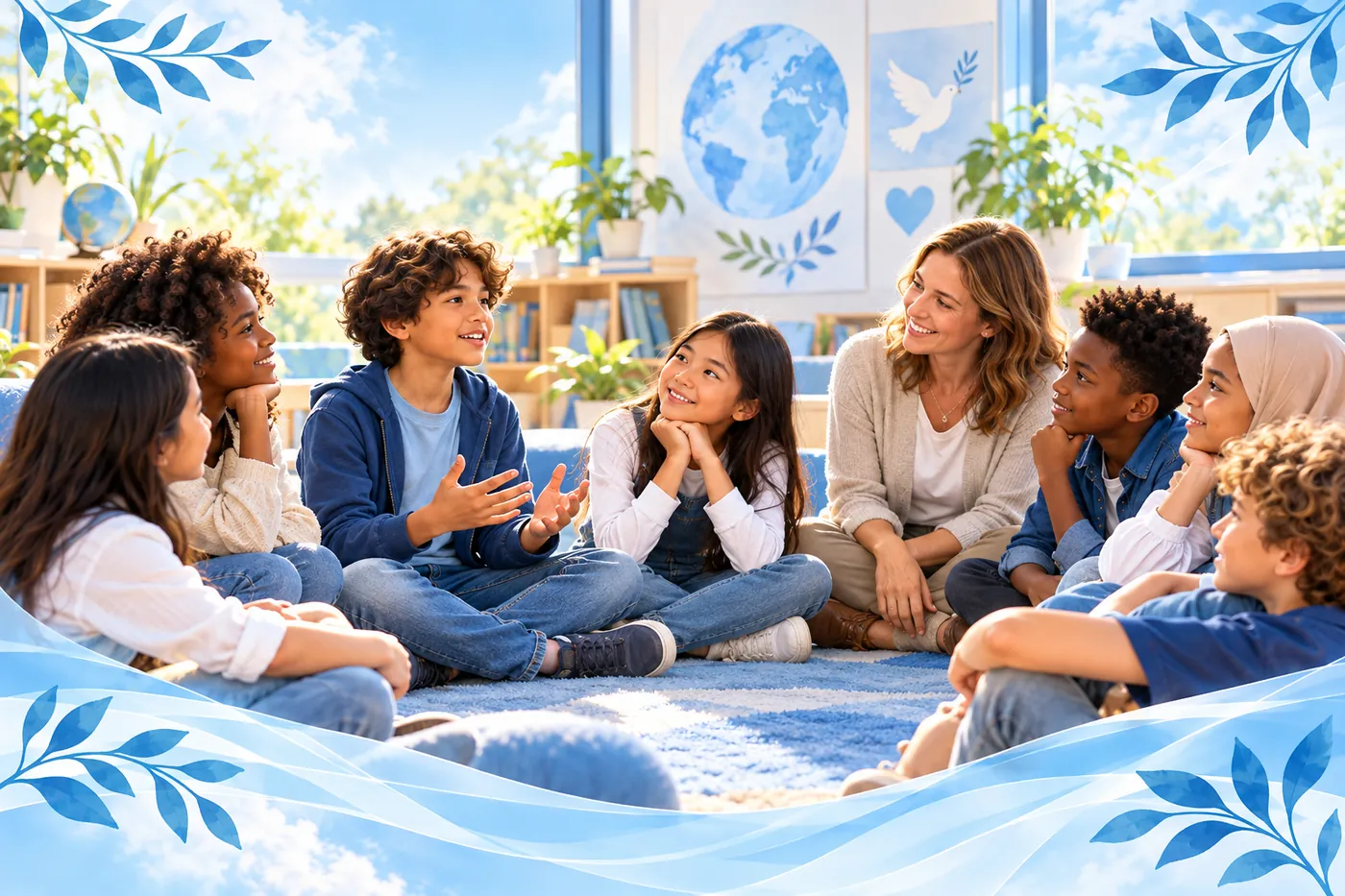
Children in a peace conversation with their teacher

Ready to join?

Register your school, and we will confirm by email and send your Peace School 2027 badge.